Goa is famous for beaches and parties. What fewer people know is that South Goa — particularly the Canacona region — holds some of the most significant Hindu temples in western India. From the world's tallest bronze Ram statue inaugurated in 2025 to a 12th-century forest temple untouched by the Portuguese Inquisition, the spiritual landscape here is extraordinary. Most guests at NIVRRITII are surprised by how much is within reach.
Four Temples Worth Visiting from NIVRRITII
The temples of South Goa span nine centuries — from a newly inaugurated world-record statue to a 12th-century forest shrine that survived the Portuguese Inquisition only because it was so remote no one found it. Here are the four most significant, all within easy reach of the villa.
One of the most significant new spiritual landmarks in all of Goa — and just 9 km from NIVRRITII. The world's tallest bronze statue of Prabhu Shree Ram, standing 77 feet tall on the banks of the Kushavati River at the entrance of Shree Samsthan Gokarn Partagali Jeevottam Math. Inaugurated on 28 November 2025 by the Math's Peethadipati in the presence of Prime Minister Narendra Modi, to mark the Math's 550th anniversary. The statue is a meticulous enlargement of a 450-year-old idol worshipped within the Math, 3D scanned and cast in high-grade bronze by sculptor Shri Anil Sutar — the same artist behind the Statue of Unity. The Math itself is one of the most revered institutions of the Goud Saraswat Brahmin community, following the Dvaita Vedanta tradition since the 13th century. The complex includes the Veer Vittal Mandir, the sacred Kushavati River ghats and the ancient Vata Vruksha. An unmissable visit — especially lit up at night.
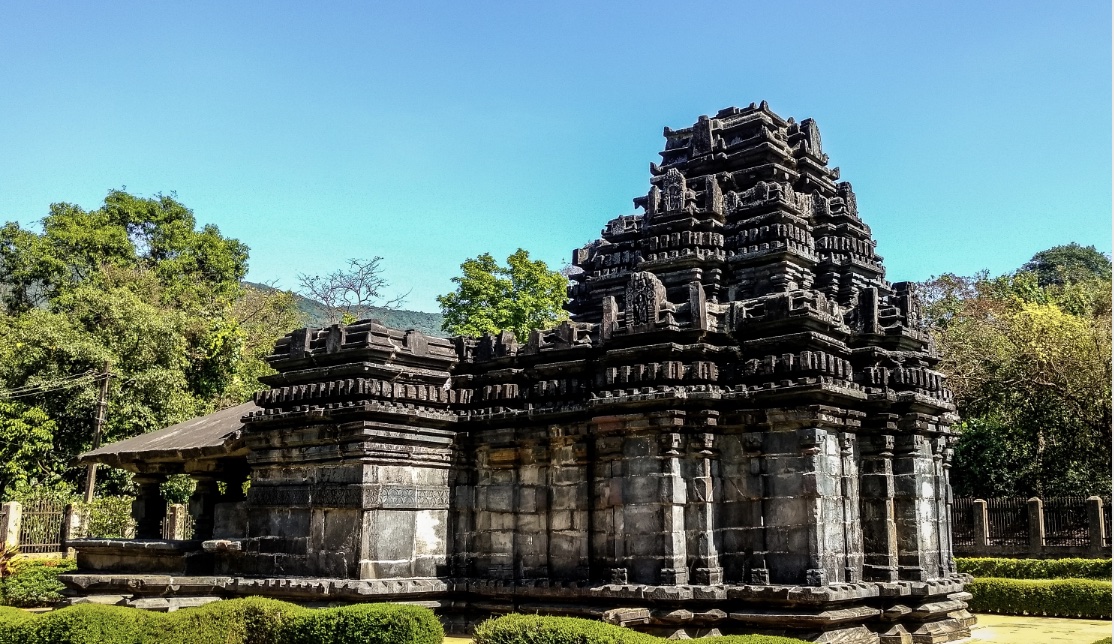
The oldest surviving temple in Goa and one of the most beautiful in western India. Built in basalt by the Kadamba dynasty in the 12th century, Tambdi Surla is dedicated to Lord Shiva and stands alone in the Bhagwan Mahavir Wildlife Sanctuary — completely intact, untouched by the Portuguese Inquisition because of its remote forest location. The silence here is extraordinary. Visit at dawn before any other tourists arrive.
The most visited and celebrated Hindu temple in Goa — dedicated to Shantadurga, the goddess of peace between Shiva and Vishnu. The 18th-century architecture blends Goan Hindu style with Portuguese baroque influences — an entirely unique visual language. The annual Zatra (festival procession) in February draws thousands. Even outside festival time, the temple complex is magnificent and the morning aarti is worth attending.
The main temple of Canacona's Chaudi village — just 5 km from NIVRRITII and the easiest to visit. A living, active temple at the heart of the local community rather than a tourist site. The Shigmo festival celebrations here in March are genuinely special — folk dance, music and processions through the village lanes. Early mornings you can watch local families offering flowers and the priest performing puja without any tourist crowds.
Alongside the ancient temples, Palolem and Patnem have quietly become one of India's most active centres for yoga, sound healing, meditation and conscious movement — drawing serious practitioners rather than casual drop-ins.